
Chiang Rai Coffee and Tea: The Mountain Traditions Behind Every Cup

In northern Thailand, a cup of coffee or tea can tell a much bigger story—one of mountain landscapes, changing livelihoods, family knowledge, and the care that turns a harvest into something memorable.
When people imagine Thailand, they often picture tropical beaches, vibrant cities, and fragrant street food. Yet far to the north, Chiang Rai offers another side of the country: winding mountain roads, misty valleys, small farming communities, and an evolving culture of specialty coffee and tea.
Travel filmmaker Art Thomya explores this world in his documentary Chiang Rai: Miracle Coffee and Tea. The journey introduces the coffee-growing communities of Pha Mee and Pha Hi and the tea traditions of Doi Wawee, focusing on local livelihoods and the natural beauty of northern Thailand.
Pha Hi and Pha Mee: Coffee With a Community Story
In the mountains near Thailand’s northern border, Pha Hi and Pha Mee have become closely associated with locally grown coffee.
The history of Pha Hi is particularly revealing. According to the Tourism Authority of Thailand, the village has deep Akha cultural roots. Coffee became an important alternative livelihood after authorities began encouraging its cultivation around 1981.
Today, coffee represents more than a crop. It connects agricultural knowledge, community identity, and opportunities for local families.
A great cup begins long before it reaches a café. Farmers must care for their trees, monitor the development of coffee cherries, select ripe fruit, and carefully process the harvest.
Every step influences the final quality.
What Makes Mountain-Grown Thai Arabica Special?
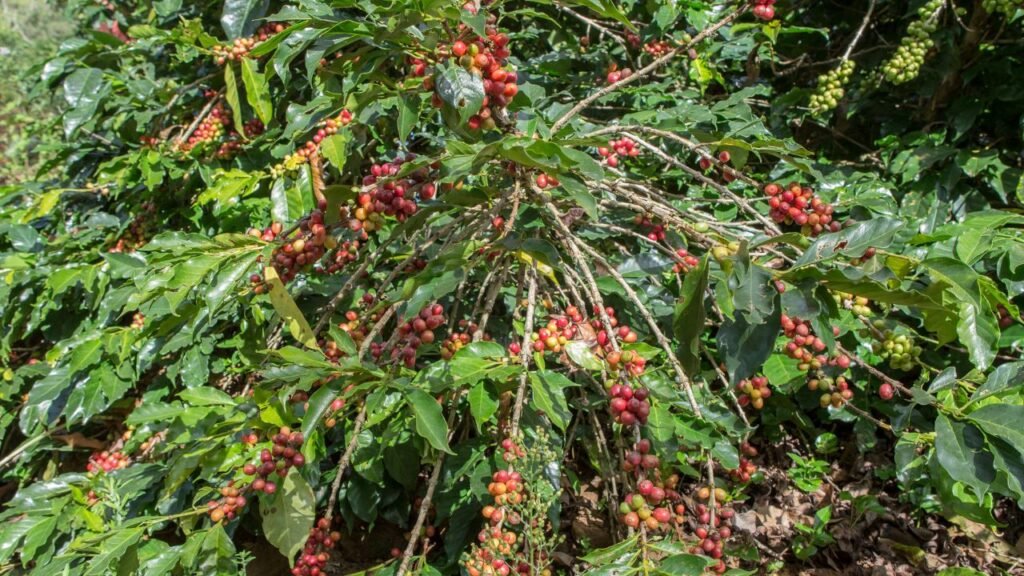
Chiang Rai’s higher-elevation growing areas offer conditions suitable for Arabica coffee.
Temperature, rainfall, altitude, shade, and soil all influence the development of coffee cherries. Cooler growing conditions can sometimes allow cherries to mature more slowly, potentially contributing to flavor complexity.
But growing coffee at higher elevations does not automatically guarantee superior flavor.
Coffee quality also depends on:
- The Arabica variety
- Cherry ripeness at harvest
- Processing and drying methods
- Storage conditions
- Roasting quality and freshness
Some northern Thai farmers cultivate coffee alongside shade trees and other crops. Such systems can help protect the soil and create more diverse agricultural landscapes. Practices vary between farms, however, and shade cultivation should not be assumed for every producer.
Doi Wawee: Where Tea Meets History
Coffee tells only half of Chiang Rai’s story.
In Doi Wawee, tea is deeply connected to local culture and the history of Chinese settlement in northern Thailand.
The area is particularly associated with oolong tea, while local producers also cultivate or process other varieties, including Assam-type teas.
The Tourism Authority of Thailand describes Doi Wawee as an important tea-growing community with a long heritage. Some of its old tea trees are believed to be several centuries old.
Tea production combines agriculture with craftsmanship.
After harvesting, different combinations of withering, rolling, oxidation, heating, and drying transform fresh leaves into distinctive teas.
These methods help explain why tea from the same plant species can develop dramatically different aromas, flavors, and appearances.
Why Freshness Matters
Coffee and tea share one essential principle: good raw materials deserve careful handling.
For coffee, seasonal harvesting determines when fresh cherries become available. Their journey from fruit to roasted beans involves processing, drying, sorting, storing, and roasting.
Freshness is not simply about harvesting coffee recently. Proper storage and the time elapsed since roasting are also important.
Tea follows a different process, but the principle is similar: the quality of the leaves and the skill of the producer are both essential.
Farming in Harmony With Nature
Chiang Rai’s mountains are not only beautiful landscapes. They are working environments where communities must balance agriculture, livelihoods, and environmental responsibilities.
Where farmers preserve existing trees and use thoughtful agroforestry methods, agricultural landscapes can support healthier soils, provide habitats, and reduce unnecessary land clearing.
These environmental benefits depend on actual farming practices rather than geographical origin alone.
Supporting responsible producers therefore begins with understanding how their products are grown and handled.
A Story Worth Discovering
Pha Hi and Pha Mee reveal how coffee has become part of local livelihoods and cultural identity.
Doi Wawee tells a different but equally fascinating story of tea, migration, tradition, and craftsmanship.
Together, they demonstrate how the character of northern Thai coffee and tea emerges from a combination of geography, human knowledge, and agricultural care.
The next time you enjoy Thai Arabica or mountain-grown tea, consider the place and people behind it.
Because sometimes the most meaningful part of a cup is the story of where it came from.